
Religion, Evolution and Self Ascendency: Why Good People are Divided by Politics and Religion
Psychologist Jonathan Haidt asks a simple, but difficult question: why do we search for self-transcendence? Why do we attempt to lose ourselves? In a tour through the science of evolution by group selection, he proposes a provocative answer.
Jonathan Haidt studies how -- and why -- we evolved to be moral. By understanding more about our moral roots, his hope is that we can learn to be civil and open-minded. His new book is "The Righteous Mind: Why Good People are Divided by Politics and Religion."
Other Videos That May Interest You:
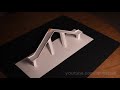
Defying Gravity
What happens in our brain when we view an optical illusion? The information gathered by the eye is processed in the brain to create an idea or image that does not match with a physical measurement of the stimulus source.
Sean Carroll: Distant Time and the Hint of a Multiverse
At TEDxCaltech, cosmologist Sean Carroll attacks -- in an entertaining and thought-provoking tour through the nature of time and the universe -- a deceptively simple question: Why does time exist at all? The potential answers point to a surprising view of the nature of the universe, and our place in it.
Frans de Waal: Moral Behavior in Animals
Empathy, cooperation, fairness and reciprocity -- caring about the well-being of others seems like a very human trait. But Frans de Waal shares some surprising videos of behavioral tests, on primates and other mammals, that show how many of these moral traits all of us share.
Antonio Damasio: The Quest to Understand Consciousness
Every morning we wake up and regain consciousness -- that is a marvelous fact -- but what exactly is it that we regain? Neuroscientist Antonio Damasio uses this simple question to give us a glimpse into how our brains create our sense of self.
Jenna McCarthy: What You Don't Know About Marriage
In this funny, casual talk from TEDx, writer Jenna McCarthy shares surprising research on how marriages (especially happy marriages) really work. One tip: Do not try to win an Oscar for best actress.